Wednesday, September 30, 2009

Jam and Jelly by Holly and Nellie by Gloria Whelan

This was an absolutely beautiful book--it looked like something you would see hanging on the walls of an art museum. The paintings are acrylic and so lifelike. Gijsbert van Frankenhuyzen works hard to create warm depictions of the family and their surroundings in these impressionistic paintings.

The family of three has a very humble lifestyle--finding many necessaries in the woods surrounding their small cottage. When the school year starts, money is needed to buy Holly a winter coat but there is none. Mama is adamant about Holly attending school and comes up with a plan to make some money. She says, "Plenty (of money) in the woods free for the taking."

Holly and her mama spend the summer collecting berries together, bathing in the sun. Green is a huge color element in all of the pages, creating a lush forest of foliage and berries. The pictures are so realistic, the reader can almost smell the strawberries and feel the blackberries. Holly and her mama work together to make the berries into jelly and sell them in a road stand. This is a charming story of a young girl and her mother spending time together. There is no amount of money that could take those memories away from them.

School starts and Holly is shown standing in her coat surrounded by snow--the only couple paintings not part of the green forest paradise. Especially in these hard economic times, it is interesting to see how hard work can pay off. I think students would love the pictures and enjoy the story. Not everyone can afford to drop $100 on a new coat at the mall, a fact which many of our students understand all too well.

Tuesday, September 29, 2009

Usborne 1001 Pirate Things to Spot by Rob Lloyd Jones

I grew up loving to look at books with good illustrations. Where's Waldo? became popular when I was younger and the format has continued to intrigue children of all ages. The style is alive and well--on a recent trip to Paris, I purchased a book that was along the same lines of Waldo--un petit garcon Theo and his little dog Potchi give a tour of Paris' famous monuments. Trying to find them in the illustrations makes these styles of books even more interactive and fun.

This pirate themed book was fun and easy to get into. I liked the pirate activities because they were done in a charming, tongue-in-cheek kind of way. Jack is the cabin boy of the ship and the goal is to find him on each page, along with several other items. I have to admit that I spent about a half and hour looking for various treasure chests, starfish, mops, and parrots.

There were some funny random scenes scattered in the larger pictures. I chuckled at the man made to walk the plank (holding his nose as he jumped) and a swordfish fighting a pirate with a sword. Of course there isn't much "reading" involved in looking at these books, but some of the items were ones most kids wouldn't normally come across--increasing vocabulary! I think kids would love this book and could use it as a springboard to look into more pirate-related materials.

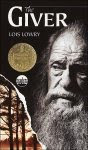
The Giver by Lois Lowry

This book, although a short novel, is very thought provoking. I hadn't read it for probably ten years and didn't really remember much about it. When talking to my sister about it, she said that it had been the first book that she ever read that made her really think (she read a lot when she was younger).

Starting into it, I was reminded of another book--Ayn Rand's The Fountainhead. Sameness is an interesting concept. These two books give the reader a glimpse into what life would be like if everyone was the same. I sometimes imagine things being much simpler if all of my major decisions were made for me. As I struggle to find focus right now, having an almighty power giving me my Assignment sounds pretty good. Sometimes it seems like there are just too many variables--cutting some of them out might make life easier. I like rules and structure, so having a culture based upon being good sounds lovely (at first glance).

Everything we teach our students about being an individual and an important part of the learning community are totally ignored in this book. There really is little respect for life, besides keeping the Community alive. As a twin myself (although fraternal), I was uneasy with the thought of one twin being selected over the other because it would be awful to have two people that were the "same." Those that don't measure up to strict standards are released (ah, the sweet release of having a needle stuck into the middle of your forehead...).

The fact that kids are known by their numbers and become adults at 12 seems very sterile and impersonal. Having sameness keeps the community working: family units with one boy and one girl, bikes for the Nines, mandatory volunteer hours, the daily pill for adults (to stop stirrings), and prepackaged food. We do catch little glimpses of imperfection from the characters: Lily's untied ribbons, Jonas' feelings towards Fiona, Father sneaking a look at the Naming List, and the Giver being unable to save his daughter Rosemary from being released. In a Utopia, transgressions are unwelcome, just as in this community.

Having the important job of The Giver comes with many strings. I wouldn't want to have such an all-consuming job that alienated me from the community. Being held in high respect is great, but having no one to confide in makes for major mental health issues. Lowry gives a startling description of The Giver's responsibilities and outlines the loneliness that comes with the title. Having all of the communities memories would be great--if they were all pleasant. Since the general population had no experience with pain or happiness, they didn't know what they were missing.
The worst part of holding the memories is not the pain. It's the loneliness of it. Memories need to be shared. (pg. 154 The Giver)


I think this book would give young teenagers a good idea of what life could be like if they truly lived in a "prison." Many times we rebel against our parents to be independent, only to find that the outside world isn't as glitzy or kind as we would hope. Jonas and his friends were not given the chance to explore except if they made the ultimate decision as Jonas did--to escape with no chance of returning. It is hard to wrap my mind around absolutely no color, music, books, memories, or real feelings. They are such a part of my everyday life that I have always taken them for granted.

Into The A, B, Sea by Deborah Lee Rose

This was a beautiful book! The illustrations, done by Steve Jenkins, must have taken a long time to make. Using cut paper collage gave the illustrations a striking, unique look that made the text even more enjoyable. This ABC book used the illustrations along with little rhymes to highlight animals of the ocean for each letter. The text on each page was short and fun to read. I liked the rhyme "Where Octopuses hide and Penguins glide" for O and P.

One of the first sea creatures, the jellyfish, captures the reader (as well as the title on the title page) and makes them read on. There was a lot of movement, texture, and bright colors to keep illustrations fresh and exciting. Changes in perspective occur rapidly from page to page, but maintains a definite sense of proportion for each set of pages.

One of my favorite parts of this book was in the very back. The author took the time to give a thumbprint picture of each sea creature and then a little description about it. Not only do kids get to have fun with the rhyming and pictures, but also with the informational facts at the end. Using this book for the beginning a unit on the ocean could be a great way to draw students in and get them excited. Also, this would be a great book for kids to read together because they would love pointing out details in the pictures to each other. They could even sing the rhymes, as there can be a definite musical undertone to them.

Sunday, September 27, 2009

Room for Ripley by Stewart J. Murphy

I have read and used several of Murphy's mathematical themed books in my classrooms. The pairing of story with a sometimes hard-to-conceptualize topic has helped children understand in a more authentic manner. I also like that the author is from Evanston, Illinois (not far from the Quad-Cities). Murphy has written a whole series of books centered around mathematical concepts and are "leveled" to help match a subject with reading ability (levels 1-3)--which of course these are subjective.

He also adds end activities to do to learn more about the concept the book was concentrating on and sometimes more books with similar concepts. The illustrations by Sylvie Wickstrom are well done and add to the explanations and story. The characters are believable and talk like kids getting a fish for the first time would. Murphy manages to integrate the measurement information without simply listing a chart of conversions. Children can make concrete connections with a better idea of what a cup looks like compared to a gallon, etc. There are really two stories that can be read here: one about a boy getting a new fish and sharing it with his older sister and one about the mathematical concept of measuring capacity with nonmetric units. Students in the past have enjoyed these books and I believe that as much quality literature as possible should be used in our classrooms--whether about math, reading, social studies, or science topics. Kids love stories and slipping in some math never hurts…

Mahjong All Day Long by Ginnie Lo

This is a great book about a Chinese family who loves to play Mahjong. The name Mahjong means "sparrow" because the moving of the tiles sounds like sparrows chirping. I thought that was interesting. I have to be honest that my only exposure to Mahjong has been through reading and watching a favorite, The Joy Luck Club.

There really weren't a lot of Chinese families in Davenport as I was growing up. My mother was an international adoption social worker, so we sometimes got to see interesting artifacts from trips abroad. I have always been fascinated by other cultures and how people live. I like that a game like Mahjong can be played by people of all ages--also a great way for families to spend time together doing culturally enriching activities. The tiles teach Chinese characters, counting, and building winning combinations.

The book was beautifully illustrated by Ginnie Lo's sister, Beth Lo. She used handmade porcelain plates for each illustration--giving the book an exotic feel to this native Midwesterner. I noticed that the characters usually had slightly larger heads than is typical in American illustrations. The bodies were littler with the emphasis on the face, which was interesting. The sisters were careful to create a simple story that concentrated on the family component being strengthened by this game. Each page was black with white text, so it was very striking. Chinese characters were used in the illustrations by characters with the meanings on the opposite page. Such a different language as Chinese can be hard to read, so I think kids would like to know maybe one character to impress their friends with. The illustrations were humerous (the kids interacting with each other sometimes away from the game, making silly comments). A beautiful way to express the love each family member has for another and a great way to spend time together each week.

ABC USA by Martin Jarrie

I thought this introduction to the alphabet had a good twist by using American icons as the illustrations. Each letter had an example (theme) and were represented in interesting ways. Jarrie did a great job of creating whimsical paintings that are appealing to the eye. The colors were bright and the style was different from what we typically see in children's illustrations (a more square, hard-edged painting instead of softer lines and shapes with watercolor). There really wasn't much to read, so a very young reader would enjoy looking through this book.

I was a little surprised at one of the letters. H is for Hollywood and the paintings are of women with their chests half hanging out of their dresses. I thought this was an interesting and sly way to insinuate that there is a "trashy" side of Hollywood. I compared the depiction of women from the H page to others and none of the others had such large chests or were uncovered. I thought it was funny and don't know if it would slip by a casual reader. Since having an expert in class talk about all the hidden meanings and symbols in picture books, I have been looking longer and more critically at illustrations. There really wasn't anything that made this book stand-out more than the next ABC book besides the afore mentioned Hollywood observations.